
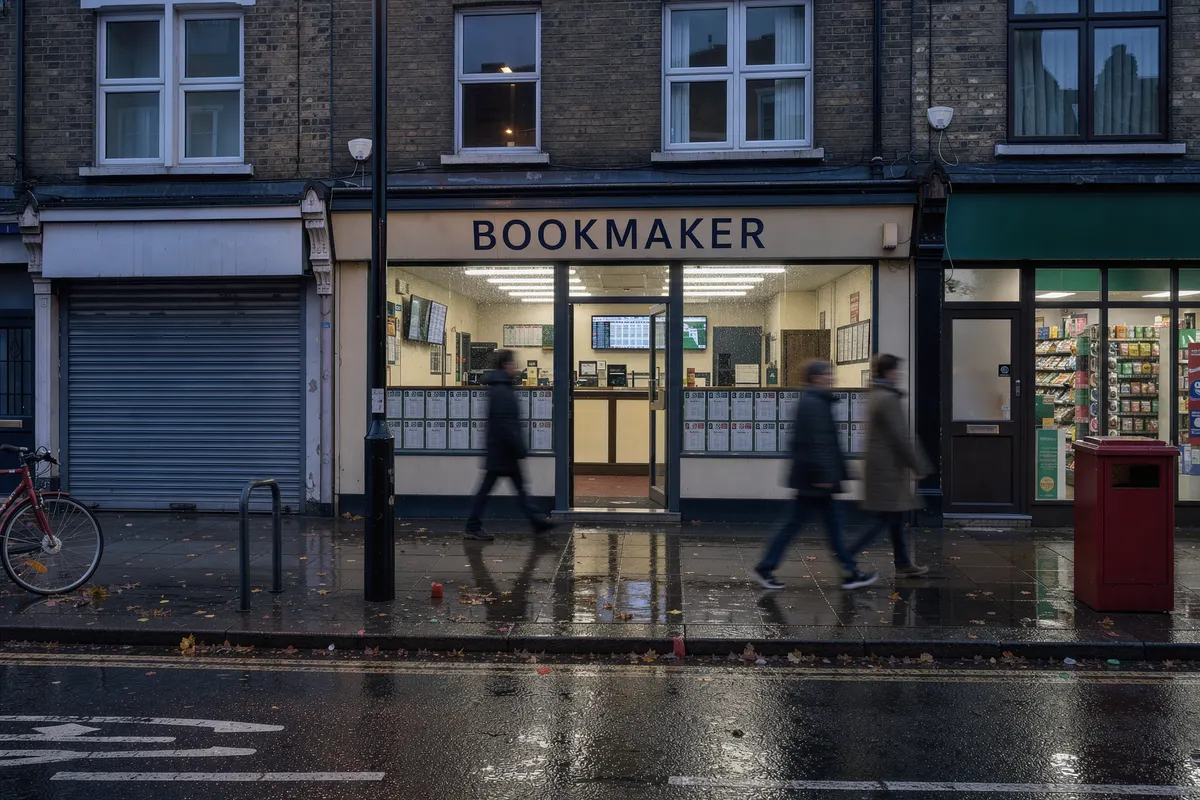
16,000 jobs. That is the number the Betting and Gaming Council puts at risk if the Treasury pushes the duty on gaming machine profits up to 40 per cent, and it is the number doing most of the heavy lifting in the Back Our Betting Shops campaign. Alongside it sit three more: nearly 1,500 shops, up to 34 casinos, and a £124m hole in Treasury revenue rather than a windfall.
Those figures come from EY analysis commissioned by the industry, so treat them as an advocacy case rather than a neutral forecast. But the campaign they anchor is worth understanding properly, because it sits on top of a much older argument about what the British betting industry is for and where it should be allowed to operate.
What the Back Our Betting Shops campaign is
The Back Our Betting Shops campaign is a lobbying push by the Betting and Gaming Council (BGC), the trade body for Britain’s licensed betting, casino and online gambling operators, aimed at stopping a proposed rise in Machine Games Duty. Its stated focus is people rather than profits: the staff behind the counter, the regulars who use the shops, and the high streets those shops sit on.
Machine Games Duty is the tax on the net takings of gaming machines. The standard band that covers betting shop terminals currently sits at 20 per cent. A move to 40 per cent would double it. The BGC’s position is blunt: shops operating on thin margins cannot absorb that, so the duty would not raise more money, it would close premises and cut the tax base instead.
Here is the campaign’s own headline case in numbers:
| What the EY analysis projects at 40% Machine Games Duty | Figure |
|---|---|
| Jobs at risk | Up to 16,000 |
| Betting shops at risk | Nearly 1,500 |
| Casinos at risk | Up to 34 |
| Net change in Treasury revenue | Reduction of £124m |
Follow the money through one shop
The clearest way to see why a machine tax matters to a whole shop is to walk through one. Picture a mid-sized unit on a provincial high street: a counter, a bank of screens showing racing from three meetings, four gaming machines along the wall, two members of staff on shift.
The morning trade is over-the-counter bets on horses and dogs, often small stakes from the same faces. Football accumulators build through the week. And a meaningful chunk of the shop’s gross gambling yield comes from those four machines, which historically have generated something close to half the win in many betting shops. Rent, rates, two salaries and a licence fee all have to be covered out of what is left after duty.
That is the mechanics behind the campaign’s argument. A tax aimed narrowly at machines does not stay narrow, because machine income cross-subsidises the counter. Double the duty on the most profitable square metres of the shop and the marginal units, the ones already breaking roughly even, stop making sense to a finance director in a head office spreadsheet. The counter closes with the machines.
The counter-argument is equally mechanical: if machine income is that pivotal to shop economics, that is partly because machines are high-intensity, repetitive products, and reform campaigners have spent years arguing they carry disproportionate harm. Both things can be true at once.
The case the campaign makes for high street bookmakers
Strip out the lobbying language and the BGC is making four arguments for high street bookmakers:
- Employment: shops are entry-level, locally recruited jobs spread across towns rather than concentrated in a tech office, with many staff moving into management from the counter.
- High street footfall: betting shops take on units that often sit empty otherwise, pay business rates, and bring regular daytime traffic to neighbouring traders.
- Supervised play: a shop has trained staff who can see a customer, enforce age checks at the door, intervene in person and bar someone who is struggling. The industry frames this as a safer environment than a phone screen at 2am. Critics point out that supervision quality varies and that in-shop machines were the product that triggered the largest regulatory crackdown in modern British gambling.
- Sport funding: retail betting contributes to British racing through the levy and media rights, plus sponsorship across football and other sports. Shrink retail, the argument goes, and racing’s income shrinks with it.
Why betting shop closures started long before this tax proposal
This is the part the campaign tends to skate over. Betting shop closures have been running for a decade, and the drivers stack up:
The FOBT stake cut. In April 2019 the maximum stake on B2 fixed odds betting terminals was cut from £100 to £2 per spin, after a long campaign over the harm associated with high-stakes roulette content in shops. The commercial effect was immediate. William Hill announced the closure of around 700 shops that year, and other chains followed with their own programmes. Whatever you think of the policy, it removed the single most lucrative product from the estate.
The shift online. Smartphones did to bookmakers what they did to travel agents and bank branches. In-play markets, cash-out, live streaming, price boosts and thousands of slot titles live in a pocket. Younger customers in particular never formed the habit of walking into a shop.
Retail costs. Rent, business rates, energy, wages and the staffing needed to keep a premises licence in good standing all rose while the yield per shop fell.
Regulation and compliance. Affordability and anti-money-laundering expectations, source-of-funds checks and Gambling Commission enforcement have raised the cost of doing business in every channel, retail included.
So the honest framing is that a machine duty rise would be an accelerant, not the cause. The chains were already pruning.
Retail betting in the UK versus online: the same industry, two different businesses
Retail betting in the UK and online gambling now behave like separate industries under one trade body, which is exactly why this campaign is interesting. The BGC represents both, and it is lobbying on behalf of the channel that is losing ground.
The tax treatment illustrates the split. Shop over-the-counter betting pays general betting duty, machine income pays Machine Games Duty, and remote games of chance pay remote gaming duty, which rose to 21 per cent in 2019. The government has also consulted on simplifying remote betting and gaming duties into a single rate. Any reform that pushes retail duty up faster than online duty effectively taxes the supervised channel harder than the one on your phone, which is the asymmetry the campaign keeps hammering.
Policy has pulled in both directions. The 2023 gambling white paper tightened the online side with measures including stake limits on online slots and a statutory levy to fund research, prevention and treatment, while also offering land-based venues some modest loosening, such as changes to casino machine entitlements and cashless payment on machines. The logic was that the digital channel had outgrown a framework written for the pre-smartphone era. Retail’s complaint is that it was regulated hard first and is now being taxed hard as well.
Who is backing the campaign and who is pushing back
Support comes from the obvious places: the major bookmaker chains and casino operators who fund the BGC, independent shop owners with no online arm to fall back on, and some trade unions and MPs in constituencies where a closure means real job losses. Racing interests have a direct stake too.
Opposition comes from several directions. Reform campaigners and harm-reduction groups argue the industry’s jobs-at-risk modelling is a standard lobbying tactic and that machine income deserves a higher rate precisely because of its harm profile. Think tanks including the Institute for Public Policy Research and the Social Market Foundation have published proposals arguing UK gambling duties are low relative to the social costs involved and could be raised substantially. The Treasury, for its part, has its own revenue modelling and is not obliged to accept EY’s.
The Gambling Commission is not a party to the tax argument at all. It licenses and regulates operators; duty rates are set by HM Treasury. That distinction gets blurred in a lot of coverage, so it is worth keeping straight: the regulator decides how you may operate, the Treasury decides what you pay.
Common questions
What is the Back Our Betting Shops campaign?
A Betting and Gaming Council lobbying campaign opposing a proposed increase in Machine Games Duty to 40 per cent, built around the employees, customers and communities tied to UK betting shops.
Why are betting shops closing?
Mainly the migration of customers to mobile betting, compounded by the 2019 cut in FOBT stakes from £100 to £2, rising retail costs and higher compliance burdens.
Is retail betting safer than online betting?
Neither channel is safe in the sense of being favourable to the player, since every product carries a built-in house edge and loses money over time. Shops offer face-to-face intervention and natural session limits; online accounts offer deposit limits, loss limits, time-outs and self-exclusion through GAMSTOP. The tools differ, the underlying maths does not.
If gambling is costing you more than you intended, free, confidential support is available through the National Gambling Helpline on 0808 8020 133 and at BeGambleAware. Licensing and operator information is published by the Gambling Commission.
Whatever the Treasury decides, the direction of travel for retail is unlikely to reverse. The realistic question is not whether the high street bookmaker survives at its current scale, but how fast it shrinks and whether that decline is managed or abrupt. That is the argument the campaign is really having.